
The Cuban henequen industry in the circular economy: Opportunities for waste valorization
Article Sidebar
Main Article Content
Abstract
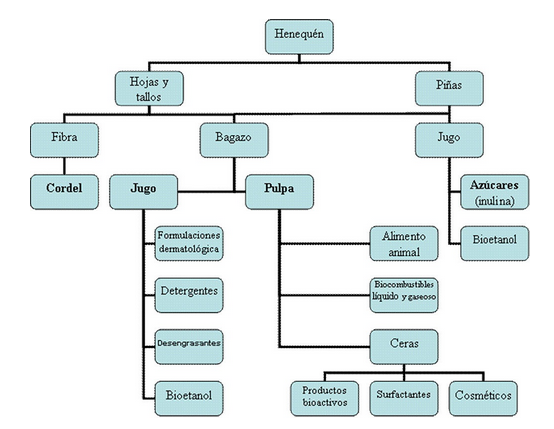
In recent years, the circular economy model has received a lot of attention as these policies constitute important factors that are necessary to accelerate and expand circular practices in the economy, such as the introduction of changes in product design and supply chains and industrial production processes, as well as the way in which products are used and disposed of at the end of their useful life. The circular economy involves abandoning the current linear economy model, which is based on “take, make and throw away” and where resources are extracted, converted into products, used, or consumed and subsequently disposed of. The concept of circular economy includes principles of life cycle and “cradle to cradle” approaches - which consider that waste is “food” for new products and processes - and is based on the transition towards renewable energy sources. In Cuba, the process associated with the employment and development of henequen has low productivity, but at the same time, it does not report large sources of income to the country due to the low use of the crop, since only the fibers of the agave leaves are used, which barely represent the 2% of the plant. The rest is made up of biomass and short fibers that are wasted, in most cases burned and represent both an environmental and financial cost. In order to propose alternatives for the treatment of waste from the henequen process, an analysis of the liquid and solid waste generated was carried out, identifying its properties and potential uses. The results show that the residual juice can be used as a detergent and the pineapples for the production of inulin and bioethanol, as well as animal feed, reducing pollution and generating benefit. It is concluded that the implementation of these alternatives is viable and fundamental for the transition of the henequen industry towards a circular economy model in Cuba
Article Details

This work is licensed under a Creative Commons Attribution-NonCommercial 4.0 International License.
References
Cáceres, M., Lappe, P., Larqué, A., Magdub, A., Barahona, L. (2009). Producción de etanol a partir de jugo de henequén (Agave fourcroydes Lem.) y melaza utilizando una mezcla de levaduras. VII Simposio Internacional de producción de alcoholes y levaduras. México.
Canché, G., Guin, L., Duarte, S. and Barahona L., (2022). Characterization of bio-oil and biochar obtained by pyrolysis at high temperatures from the lignocellulosic biomass of the henequen plant. Journal of Material Cycles and Waste Management, 24,751-762. https://doi.org/10.1007/s10163-022-01361-5
Ferrer, C. M., Zumalacárregui B., Mazorra M. (2023). Extracción de inulina a partir de piñas de desecho de henequeneras cubanas. Revista Cubana de Química, 35(20), 322-337.
Ferrer C.M., Mazorra M, Zumalacárregui B. (2010) Henequén: Un producto útil y aprovechable. Monografía Centro de Estudios de Tecnologías Energéticas Renovables, CUJAE, Cuba. ISBN 978-959-261-328-7
López-Covarrubias, M., Aguilar-Juárez, O. (2023). Tratamiento de vinazas tequileras a partir de biochar derivado de bagazo de agave Tendencias en Energías Renovables y Sustentabilidad (TERYS), 2(1): 327-333
Luzardo, B., Ruiz, E, Pérez, J.C. (2022). Transformación de biomasa lignocelulósica en biocombustible de segunda generación: estado del arte del pretratamiento. Bases de la ciencia., 7(Especial), 3-22. https://doi.org/10.33936/revbasdelaciencia.v7i3.4243
Llerena, D., Zumalacárregui, L., Zumalacárregui, B. (2023): Obtención de inulina a partir de piñas de henequén. Revista RENIA. 4(3) Septiembre-Diciembre Publicado: 28-11-2024
NC-27-2012: Vertimiento de aguas residuales a las aguas terrestres y al alcantarillado, Especificaciones. Oficina Nacional de Normalización, Cuba. 2012 /Rev.3
ONU (2018), La Agenda 2030 y los Objetivos de Desarrollo Sostenible: una oportunidad para América Latina y el Caribe (LC/G.2681-P). Santiago de Chile
Rendón L., Colunga M., Barahona M., Pimienta E., Magdub A.,Larqué A. (2009) Sugars and alcoholic byproducts from henequen (Agave fourcroydes) as influenced by plant age and climate. Revista Fitotecnia Mexicana, 32, 39-44.
Rodríguez A. M., Ferrer C. Procedimiento para la obtención de cera a partir de desechos de la industria henequenera, Patente cubana, 22801.1998.
Toledano N. (2023) Sustitución de agua por jugo de Henequén en los productos detergentes Amon y Deterlimp. [Tesis de pregrado. Universidad Tecnológica de la Habana] Archivo digital.
Wang, Y., Cui. X. (2024) Modeling and quantification of agricultural waste recycling for agricultural industrial structure optimization in a novelty multi-village industrial complex. Environmental Impact Assessment Review 106:107484. https://doi.org/10.1016/
Zumalacárregui, B., (2011). Cera de henequén. Aplicaciones como emulgente. Monografía Universidad Tecnológica de la Habana, CUJAE, Cuba. ISBN 978-959-261-374-4
Zumalacárregui, B, Zumalacárregui, L, Ferrer, C, (2023) Inulina producto de la diversificación de la industria henequenera Monografía. Universidad Tecnológica de la Habana, CUJAE, Cuba. ISBN 978-959-261-622-6
Zumalacárregui, B., Zumalacárregui, L., Ferrer, C., (2024) Edulcorantes naturales. Monografía Universidad Tecnológica de la Habana, CUJAE, Cuba. ISBN 978-959-261-633-2